Typical cloud chatbot
- Data home — their servers.
- Memory — opaque, provider-controlled.
- Actions — no receipts.
- Outbound reach — wherever they route.
- Untrusted content — flows straight in.
- Provider — locked to one vendor.
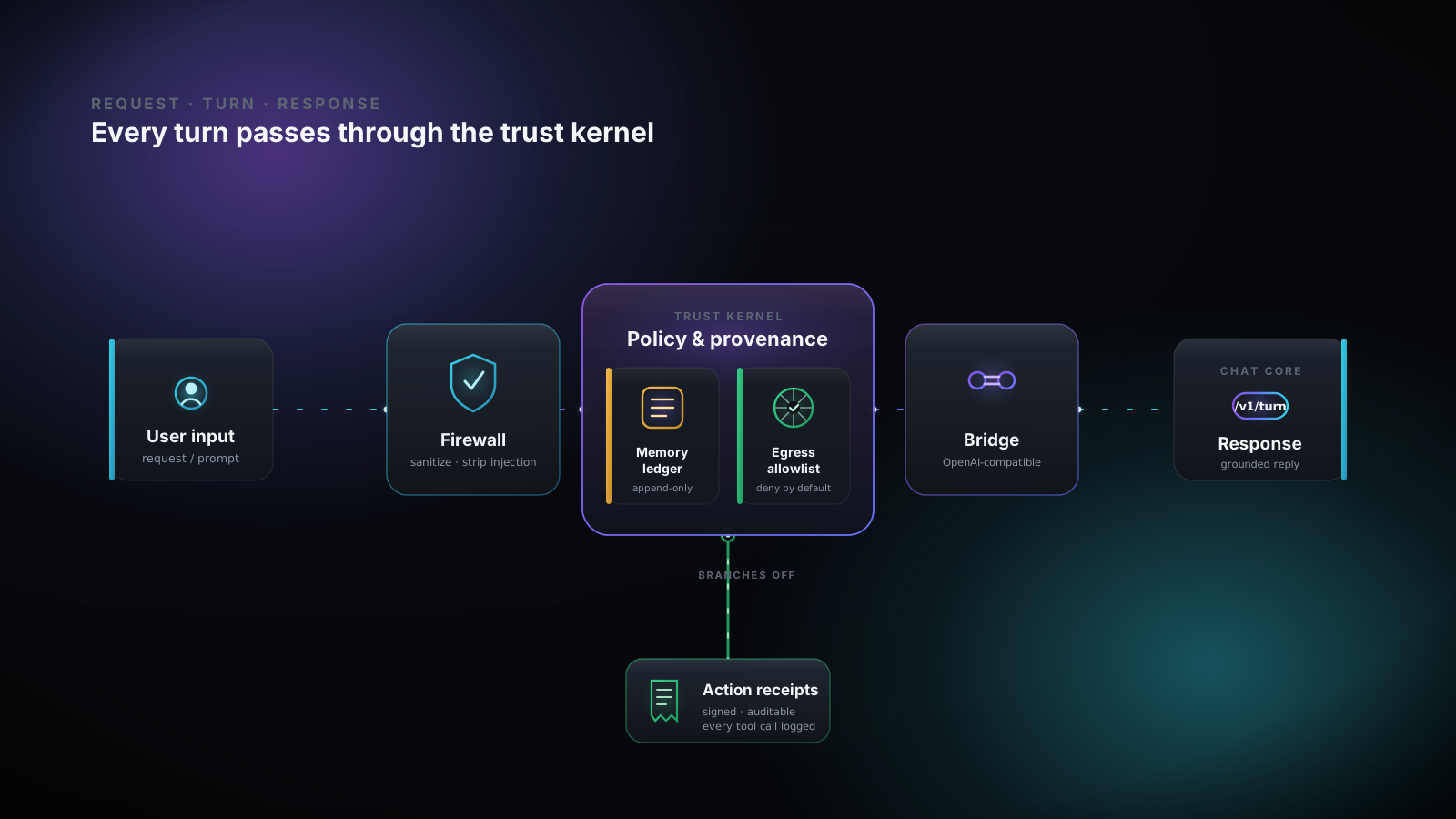
Cloud chatbots are excellent at thinking. What they don't give you is a place you own to govern memory, restrict reach, and audit actions. That's the gap Nebula-COS fills today — and it does it without pretending to be finished.
We compare on what COS actually ships, not on roadmap. The proactive / voice / recall pillars are coming; the owned trust kernel is here.
Cloud chatbots are excellent at thinking. What they don't give you is a place you own to govern memory, restrict reach, and audit actions. That's the gap Nebula-COS fills today — and it does it without pretending to be finished.
We compare on what COS actually ships, not on roadmap. The proactive, voice, and recall pillars are coming; the owned trust kernel is here.
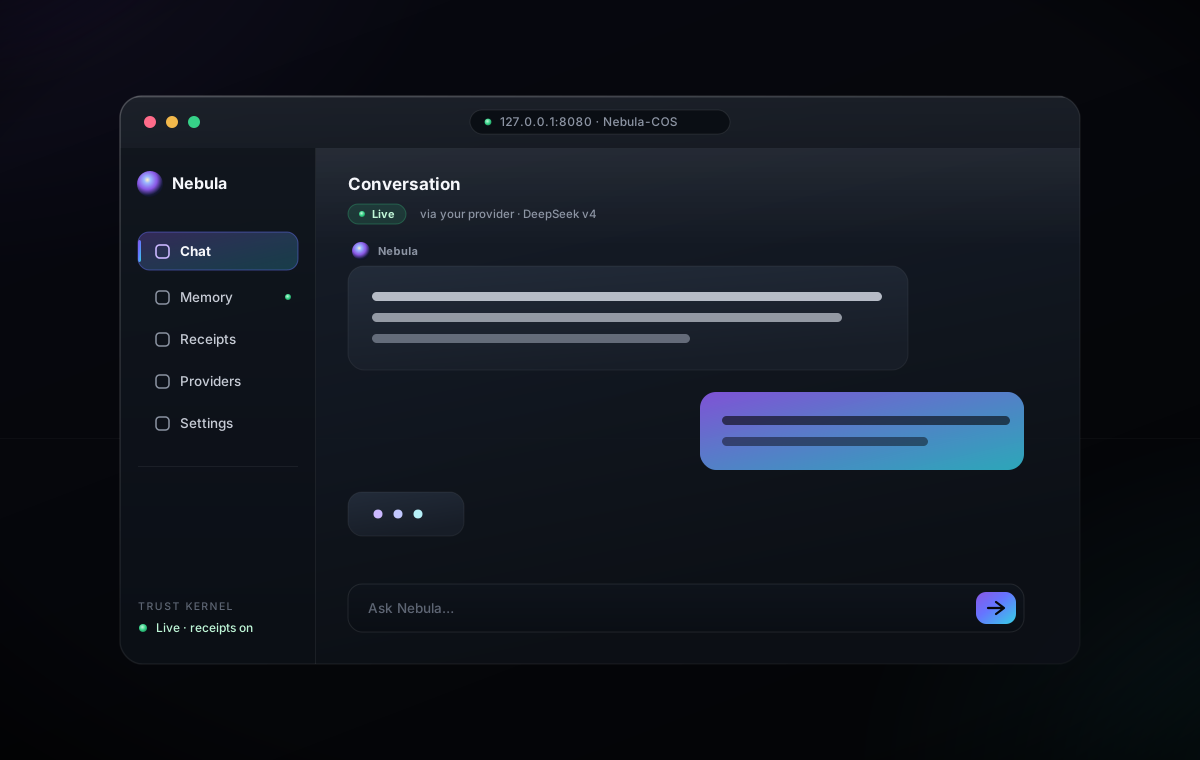
Same job, different center of gravity. Every Nebula cell below is a capability that's live today — roadmap items are omitted here, not faked.
Each of these does something well. None of them is an owned, governed personal-intelligence backend — kept honest below.
Open-Interpreter-style agents are powerful, but there's no persistent owned trust kernel, no contract-first capability matrix, and no governed egress. COS's recall layer is roadmap, but its owned-state + governance is live.
Owned state + governance · LiveHome Assistant is great at devices — but it isn't a personal-intelligence backend with memory, action, and provider governance. COS's recall layer is roadmap, but its owned-state + governance is live.
Owned state + governance · LiveMemGPT-style libraries are something you wire yourself — versus an installable backend with auth, storage recovery, backups, and a capabilities contract out of the box. COS's recall layer is roadmap, but its owned-state + governance is live.
Owned state + governance · LiveThe reason to own this layer compounds as the engine ports in — recall across conversations, talk-to-it voice, and a proactive assistant that proposes and acts with receipts. Those are roadmap, labeled as such. You can adopt the owned foundation now and grow into the rest.